Honda & Mazda Transmission Fluids: A Complete Buying Guide
Choosing the correct Honda & Mazda transmission fluids is one of the smartest things you can do for your car. Because transmission fluid keeps every gear shift smooth, the right choice protects your engine from costly damage. However, many drivers in Kenya still guess when topping up their fluid, and this guesswork often leads to expensive repairs later.
In this guide, you will learn exactly what to look for, why it matters, and how to keep your Honda or Mazda running smoothly for years. Additionally, we will cover common problems, expert tips, and answers to frequent questions.
Why Honda & Mazda Transmission Fluids Matter
Transmission fluid does more than lubricate moving parts. Instead, it cools the transmission, cleans internal components, and transfers hydraulic power between gears. Therefore, using the wrong fluid can cause slipping, overheating, or even total transmission failure.
Honda and Mazda vehicles are built with precise engineering. Consequently, they require specific fluid formulas designed for their unique gearbox systems. Meanwhile, using a generic or incompatible fluid may void your warranty and shorten your transmission’s lifespan.
How Genuine Fluids Protect Your Investment
First, genuine Honda & Mazda transmission fluids are tested to match factory specifications exactly. Second, they contain additives that prevent corrosion and foam buildup. As a result, your gearbox stays protected under heavy traffic, steep hills, and long highway drives, which are all common conditions across Kenyan roads.
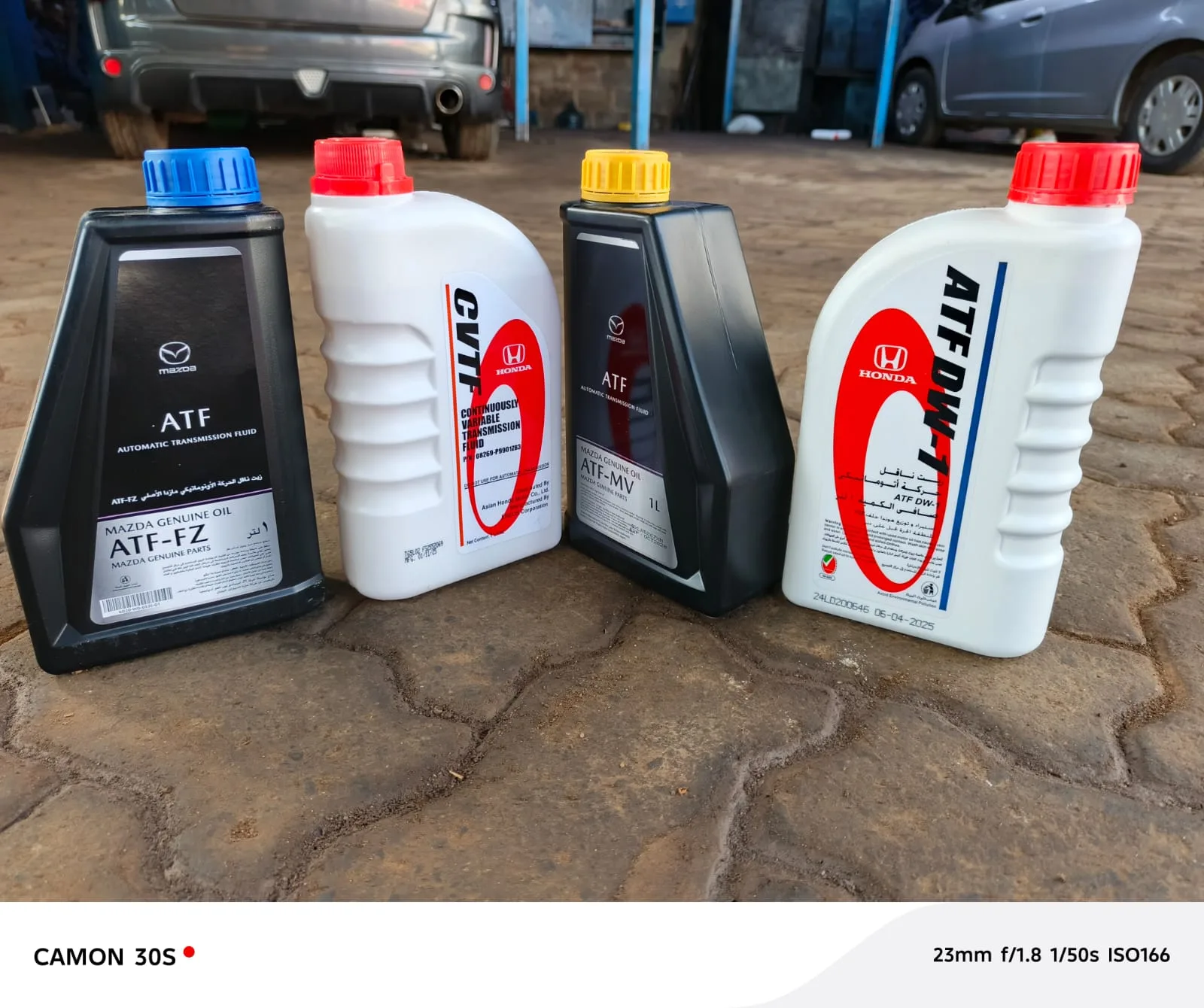
Genuine automatic transmission fluid designed for Honda and Mazda gearboxes.
Benefits of Using the Right Transmission Fluid
Selecting quality fluid brings several advantages. For example, your car shifts gears more smoothly, and your fuel economy often improves. Besides these benefits, the correct fluid also reduces heat buildup, which protects seals and gaskets from premature wear.
- Smoother, quieter gear changes
- Longer transmission lifespan
- Reduced risk of overheating
- Better fuel efficiency
- Lower long-term repair costs
Furthermore, regular fluid changes help your mechanic spot early warning signs before they become major problems. Similarly, clean fluid makes it easier to diagnose unusual noises or delayed shifting.
Besides these practical advantages, quality fluid also protects resale value. Because a well-maintained transmission history reassures future buyers, this small investment often pays off when it is time to sell your car. Additionally, dealers and mechanics can quickly confirm proper maintenance through service records, which builds buyer confidence.
Types of Honda & Mazda Transmission Fluids
Not every automatic transmission fluid is created equal. Because Honda and Mazda use different transmission designs across their model ranges, manufacturers produce several distinct fluid formulas. For instance, Honda’s ATF-DW1 is designed for specific automatic gearboxes, while Mazda often specifies its own dedicated fluid type for newer models.
Meanwhile, some older vehicles may still use conventional ATF, whereas newer models increasingly require synthetic or semi-synthetic blends. Consequently, checking your model year and gearbox type before buying fluid is essential. Otherwise, you risk purchasing a product that does not match your vehicle’s engineering.
Manual Versus Automatic Transmission Fluid
Additionally, manual transmissions typically require a different fluid altogether, since they rely on gear oil rather than hydraulic ATF. Therefore, drivers should never assume that one product suits both transmission types. Instead, always confirm which category your vehicle falls into before making a purchase.
Common Transmission Fluid Problems
Even reliable Honda and Mazda models can develop transmission issues over time. Because fluid naturally degrades with heat and mileage, ignoring maintenance often leads to bigger problems.
Signs You Need a Fluid Change
- Delayed or jerky gear shifts
- A burning smell from the engine bay
- Dark or gritty-looking fluid
- Whining or grinding noises while driving
- Fluid leaks under the vehicle
If you notice any of these signs, therefore, it is wise to inspect your fluid immediately. Otherwise, small issues can quickly turn into expensive transmission repairs.
Why Regular Checks Matter
Many drivers assume automatic transmissions never need fluid changes. Instead, most manufacturers recommend periodic checks, especially for vehicles used in stop-and-go city traffic. Consequently, routine inspection helps you avoid sudden breakdowns and unplanned repair bills.
Moreover, low fluid levels can strain your transmission pump, which may lead to premature wear. For example, a slow leak that goes unnoticed for months can gradually starve the gearbox of the lubrication it needs. As a result, what starts as a minor drip can eventually cause thousands of shillings in avoidable repair costs.
Expert Tips for Choosing Honda & Mazda Transmission Fluids
Selecting the right fluid does not have to be complicated. Instead, follow these simple expert tips to make a confident decision.
- Always check your owner’s manual for the exact fluid type recommended by the manufacturer.
- Avoid mixing fluid types, because different formulas can react poorly together.
- Buy from trusted suppliers to avoid counterfeit or diluted products.
- Schedule regular servicing so a professional can inspect fluid color and level.
- Ask a specialist whenever you are unsure, since guessing can be costly.
For genuine spare parts and additional automotive supplies, you can also explore Spares Kenya, a trusted resource for vehicle owners across the country.
Working With a Trusted Mechanic
Finally, partnering with an experienced mechanic makes fluid selection much easier. A skilled technician will know your model’s exact requirements and can recommend the best Honda & Mazda transmission fluids for your specific driving habits. Moreover, they can spot early leaks or wear before they cause lasting damage.
How Often Should You Change Transmission Fluid?
Most Honda and Mazda models perform best when fluid is changed every 40,000 to 60,000 kilometers. However, this interval can vary depending on driving conditions, vehicle age, and how the car is used daily. Similarly, vehicles used for towing or frequent short trips may need more frequent changes.
Because Nairobi traffic often means long idle periods, local drivers should consider checking their fluid slightly more often than the standard recommendation. Additionally, a quick inspection during routine servicing costs far less than a full transmission rebuild.
Frequently Asked Questions
1. What are the best Honda & Mazda transmission fluids for automatic gearboxes?
The best choice is always the fluid specified in your owner’s manual, since Honda & Mazda transmission fluids are formulated to match each model’s exact gearbox design.
2. Can I use the same fluid for both Honda and Mazda vehicles?
Not always. Although some formulas overlap, it is safer to confirm compatibility before mixing Honda & Mazda transmission fluids across different models.
3. How do I know if my transmission fluid needs changing?
Dark, gritty fluid, delayed shifting, or unusual noises are common signs. Therefore, an inspection is recommended as soon as you notice any of these symptoms.
4. Does using the wrong fluid void my warranty?
Yes, in many cases. Manufacturers often require specific Honda & Mazda transmission fluids to maintain warranty coverage, so always check your documentation first.
5. Where can I get genuine transmission fluid in Kenya?
You can visit DOHC Auto for genuine, quality-tested fluid options suited to your vehicle’s exact needs.
Conclusion
Choosing quality Honda & Mazda transmission fluids protects your engine, improves performance, and saves you money over time. Therefore, do not wait until you notice warning signs before checking your fluid levels. Instead, make regular inspection part of your routine car care.
Lastly, if you need expert advice or genuine transmission fluid for your Honda or Mazda, our team is ready to help. Contact DOHC Auto today to book a service or ask any questions about your vehicle’s transmission needs.