Why Radiator Cleaning is Crucial for Your Car’s Engine
Your car’s coolant radiator is the heart of the cooling system. It regulates engine temperature, prevents overheating, and ensures smooth performance. Over time, however, dust, rust, scale deposits, and debris accumulate inside the radiator and reduce its cooling efficiency. A neglected radiator can lead to engine overheating, fuel wastage, costly repairs, or even complete engine failure.
At DOHC Auto Experts Nairobi, we specialize in professional radiator cleaning services for vehicle models including Honda and Mazda. With advanced cleaning techniques, genuine coolants, and expert care, we help restore your radiator’s performance and extend your car’s lifespan.
Benefits of Cleaning Your Coolant Radiator
Improved Engine Cooling – A clean radiator allows smooth coolant circulation, keeping the engine at the optimal operating temperature.
Prevents Overheating – Removing clogs, rust, and debris improves airflow and reduces the risk of breakdowns.
Better Fuel Economy – A cooler, well-maintained engine consumes less fuel.
Extended Engine Life – Prevents excess wear and tear caused by overheating and high friction.
Saves Money on Repairs – Avoids costly issues like water pump damage, thermostat failure, or blown head gaskets.
How Often Should You Clean or Flush Your Radiator?
For most vehicles, it’s recommended to clean or flush the radiator every 20,000 – 30,000 km. However, if you regularly drive in dusty roads, off-road terrain, or Nairobi’s heavy traffic, your radiator may require cleaning sooner.
Routine radiator flushing also removes old coolant deposits and rust that clog the cooling system.
Signs Your Radiator Needs Immediate Cleaning
Engine temperature gauge frequently runs high
Coolant leaks under the car
Visible rust, dirt, or scale buildup inside the radiator
Cabin heater producing weak or no heat
Reduced fuel efficiency
If you notice these issues, don’t wait—bring your car for radiator servicing in Nairobi before it escalates into a major engine repair.
Why Choose DOHC Auto Experts for Radiator Cleaning in Nairobi
Professional cooling system diagnosis & cleaning
Use of genuine coolants & high-quality radiator flush solutions
Trained technicians experienced with Japanese, European & local vehicles
Affordable pricing with transparent service charges
Convenient location in Mirema Lane, Nairobi
Our goal is to help you drive worry-free, knowing your cooling system is in top shape.
Why Mechanics in Nairobi Recommend Regular Engine Detailing for Mazda Cars
Mazda cars are among the most popular vehicles on Nairobi roads. They are reliable, stylish, and fuel-efficient, making them a top choice for daily use. But according to mechanics in Nairobi, one of the most overlooked maintenance practices for Mazda owners is regular engine detailing. This simple service can prevent costly breakdowns, improve performance, and extend the life of the car.
What Mechanics Mean by Engine Detailing
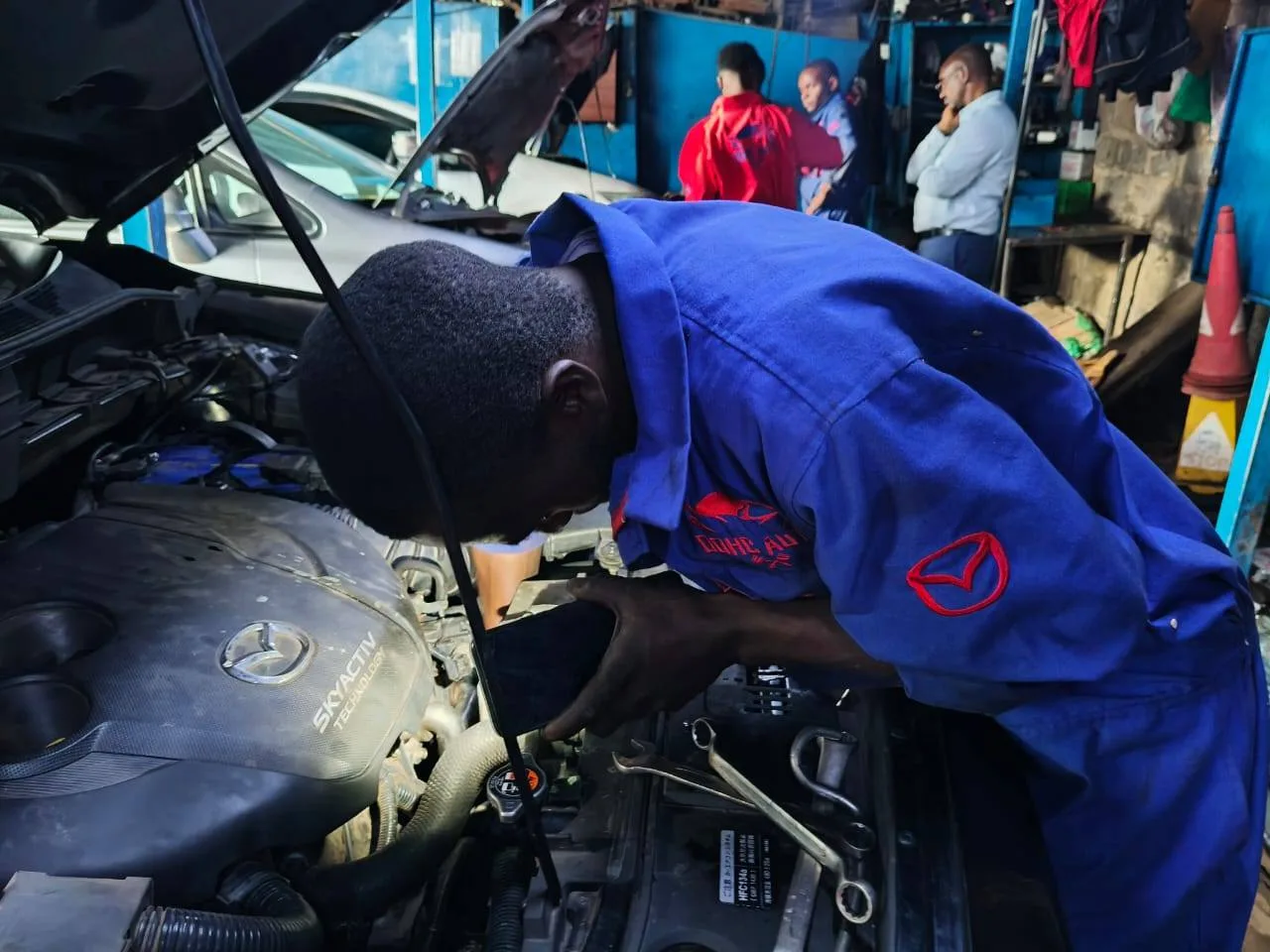
Mazda engine servicing and detailing by a DOHC Auto mechanic in Nairobi
A mechanic will tell you that engine detailing is more than just cleaning the visible parts of your car. It involves carefully degreasing the engine bay, removing dust, grime, and oil buildup, and applying protective products to prevent corrosion. For Mazda cars, which depend on precise engineering, mechanics emphasise that engine detailing is essential for consistent performance.
Nairobi Mechanics on Local Driving Conditions
Mechanics in Nairobi know the unique challenges drivers face:
Dust and dirt from rough and unpaved roads clog engine parts.
Traffic jams cause overheating from prolonged idling.
Weather changes create moisture and grime buildup that damage sensitive components.
Local mechanics report that Mazdas in particular suffer when these conditions are ignored, which is why detailing becomes so important.
Benefits Mechanics Highlight for Mazda Owners
Improved Performance
Mechanics confirm that a clean Mazda engine runs more smoothly, with fewer overheating issues and better fuel efficiency.
Early Problem Detection
Engine detailing allows a mechanic to spot leaks, worn-out belts, or corroded connections before they turn into bigger problems.
Longer Engine Life
Nairobi mechanics stress that removing dirt and grime reduces wear and tear, helping Mazda engines last longer.
Higher Resale Value
When a mechanic inspects a clean, well-maintained Mazda, it’s more appealing to buyers and commands a higher resale price.
Advice From Mazda Mechanics in Nairobi
Many Mazda mechanics in Nairobi recommend scheduling engine detailing every 3–6 months. They’ve seen firsthand how regular detailing prevents overheating, improves efficiency, and avoids expensive repairs.
One Nairobi mechanic explained: “We often see Mazdas come in with overheating or strange noises, and most of the time it’s just because the engine bay has never been cleaned. Regular detailing could have prevented the issue.”
DIY vs Professional Mechanics for Engine Detailing
DIY Cleaning: Some car owners attempt to clean their Mazda engines themselves, but mechanics caution that it’s easy to damage sensitive wiring or sensors.
Professional Detailing: Mechanics in Nairobi use the right tools, cleaners, and protective products to safely detail engines. For most Mazda owners, mechanics recommend this as the safer and more effective option.
Conclusion
If you own a Mazda in Nairobi, finding the right mechanic makes all the difference. Regular engine detailing not only boosts performance but also prevents costly repairs and keeps your car in top shape. By trusting experienced Nairobi mechanics, you’ll ensure your Mazda runs smoothly, stays reliable, and holds its value for the long term.
Ready to give your car the care it deserves? Contact us today to book an appointment with DOHC Auto.
If you own a Honda or Mazda and are looking for a mechanic in Nairobi, Kenya, it’s important to understand how the city’s busy traffic, rough roads and dusty, hot weather affect your vehicle. Even small things like low coolant or worn brake pads can turn into big, expensive repairs when left unchecked.
That’s why this guide covers the most important maintenance tips and what to look for when choosing a mechanic in Nairobi, Kenya, so you can keep your Honda or Mazda running smoothly.
Nairobi’s Roads and Climate: A Tough Test for Cars
In Nairobi, one day you’re cruising on a freshly tarmacked road, the next you’re dodging potholes and uneven surfaces. Because of this, suspension parts like shocks, struts and control arms wear down much faster.
On top of that, many drivers overload their cars when tackling rough roads, which puts even more strain on the springs and struts.
Then there’s the heat and dust. During the dry season, engines and batteries struggle in high temperatures, and dusty air clogs up filters much quicker than normal.
That’s why it’s important to stay on top of basic checks things like using the right coolant mix (always 50/50, never plain tap water) and inspecting your radiator hoses regularly. Following the recommended service schedule really makes a difference in these conditions.
Honda vs. Mazda: Different Designs, Similar Care
While road conditions affect both brands, it’s also important to understand how their engines differ.
Honda’s engines (like i-VTEC and Earth Dreams) are engineered for a balance of power and fuel economy, and they require the correct oil viscosity and timing to perform well.
On the other hand, Mazda’s Skyactiv engines use very high compression ratios to boost efficiency. In Kenya’s hilly terrain, Mazda’s extra torque and fuel savings can be a real advantage.
In both brands, using manufacturer-recommended fluids and high-quality parts keeps the systems working properly. However, skipping scheduled maintenance on valves, spark plugs, or filters will reduce performance and reliability over time.
Essential Maintenance Checklist
Stay on top of routine care for peace of mind and to avoid breakdowns. Follow the manufacturer’s service schedule (which usually means oil and filter changes every 5,000–10,000 km, even closer in dusty heat), and do extra checks for local conditions.
Here are the key tasks:
Engine & Cooling System Care
Engine Oil & Filter: Change every 5,000–10,000 km (more often in stop-and-go city use). Fresh oil prevents sludge and reduces wear.
Cooling System: Check coolant level and quality at each visit. Use a 50/50 coolant mix and inspect radiator, hoses, and clamps for cracks. A clean radiator and working fan are essential in Nairobi’s heat.
Topping up coolant during routine service helps Mazda owners prevent overheating in Nairobi’s hot traffic conditions.
Air, Brake and Electrical Components
Air Filters (Engine & Cabin): Replace engine air filter every 15,000–30,000 km. Cabin/AC filters should be changed every 15,000–20,000 km.
Brakes: Inspect pads, rotors and fluid every 10,000–15,000 km. Replace pads promptly and flush the brake fluid every 2–3 years to avoid moisture build-up.
Battery & Electrical System: Test the battery annually. Replace the battery once it’s around 3–4 years old, and clean terminals regularly.
Tyres, Suspension & Drivetrain
Tyres & Wheels: Check pressure every two weeks. Rotate tyres every 8,000–10,000 km. Uneven roads in Nairobi often cause blowouts and alignment problems, so keep an eye on cracks or bulges.
Suspension & Steering: Inspect shocks, struts and bushings yearly. If you hear clunks or feel a bumpy ride, have a mechanic check the suspension system.
Transmission & Drivetrain: Change transmission fluid every 40,000–60,000 km. Listen for unusual noises and service the differential or transfer case (if fitted).
Belts, Hoses & Spark Plugs: Inspect belts and hoses at each oil change and replace if cracked. Replace timing belts on schedule (~160,000 km) and change spark plugs around the 80,000 km mark.
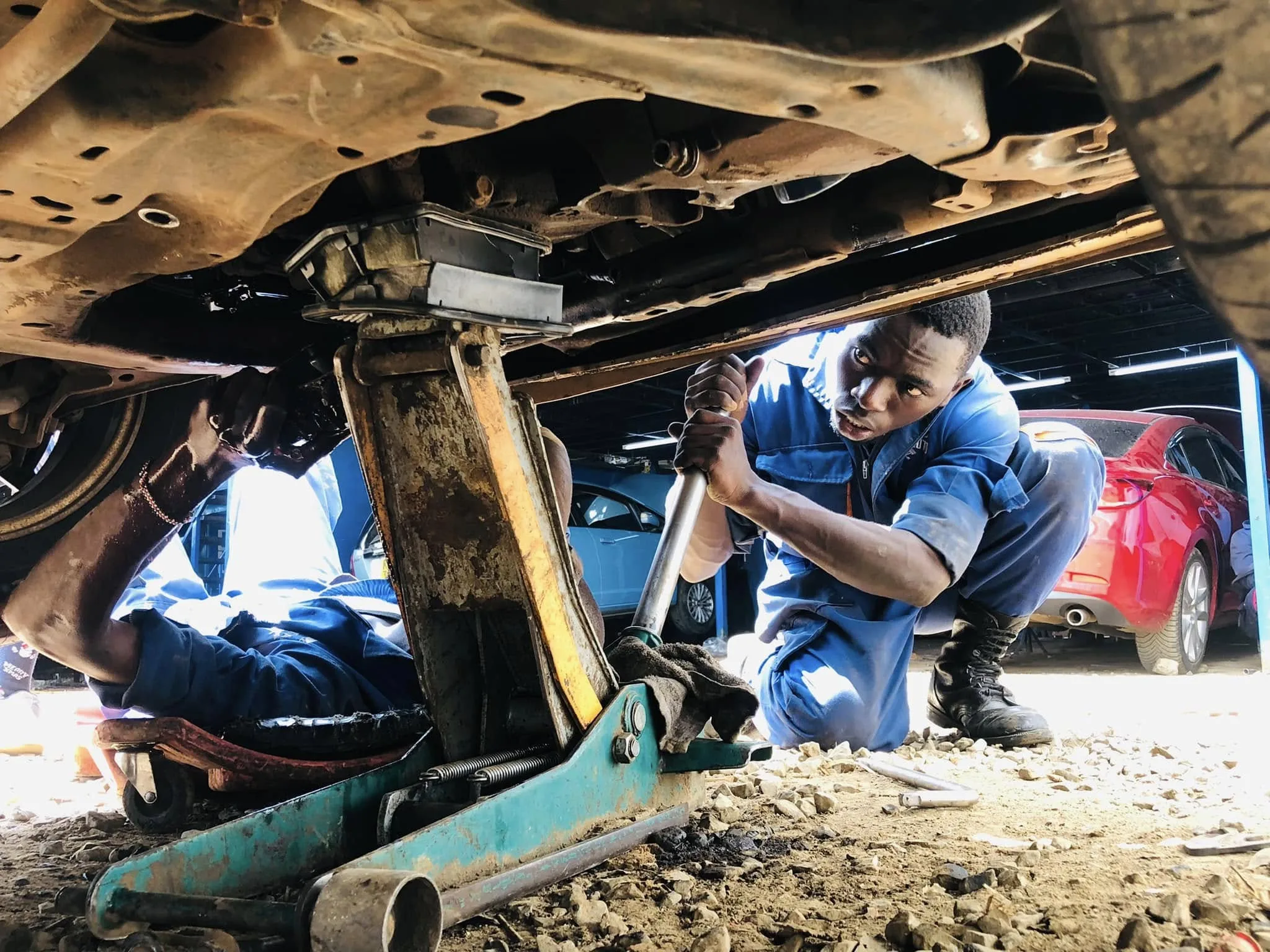
Two mechanics at Dohc Auto in Nairobi inspect a Honda, one checking the engine and the other working on the front wheel to prevent breakdowns.
By performing all these checks on schedule, you “invest” in your car’s reliability: routine upkeep prevents small issues from becoming costly repairs.
Using Proper Parts: OEM vs. Aftermarket
For Honda and Mazda vehicles, using the correct parts makes a big difference in durability. Original Equipment Manufacturer (OEM) parts fit perfectly and usually last longer. In contrast, aftermarket parts vary in quality and don’t always perform the same.
That said, reputable garages in Nairobi can source either OEM or high-quality aftermarket parts. Just make sure the parts meet Honda/Mazda specifications and keep a record of what has been replaced.
Choosing the Right Mechanic in Nairobi, Kenya for Your Honda or Mazda
Finding a mechanic in Nairobi who understands Hondas and Mazdas is key. Look for shops certified or highly experienced with these brands, as they know the specific systems such as i-VTEC and Skyactiv. They will also use proper diagnostic tools and follow the correct service procedures.
Moreover, it’s wise to ask about warranties and read reviews from other owners. Building a relationship with one trusted garage often leads to better service, faster turnaround and clear advice.
Ultimately, working with an experienced mechanic in Nairobi, Kenya, and following a proactive maintenance schedule is the best way to keep your Honda or Mazda safe, reliable and cost-effective on local roads.
If you’re unsure where to begin, feel free to reach out and ask for guidance. A reliable mechanic in Nairobi, Kenya, should always be able to advise you on the next steps, even before any work begins.
You can visit our contact page to request an inspection or ask about our Honda and Mazda services. While the service isn’t free, we’ll always let you know the cost upfront so you can make an informed decision.